

Choosing the Right Exhibition Stand Designers: A Professional Checklist for 2026
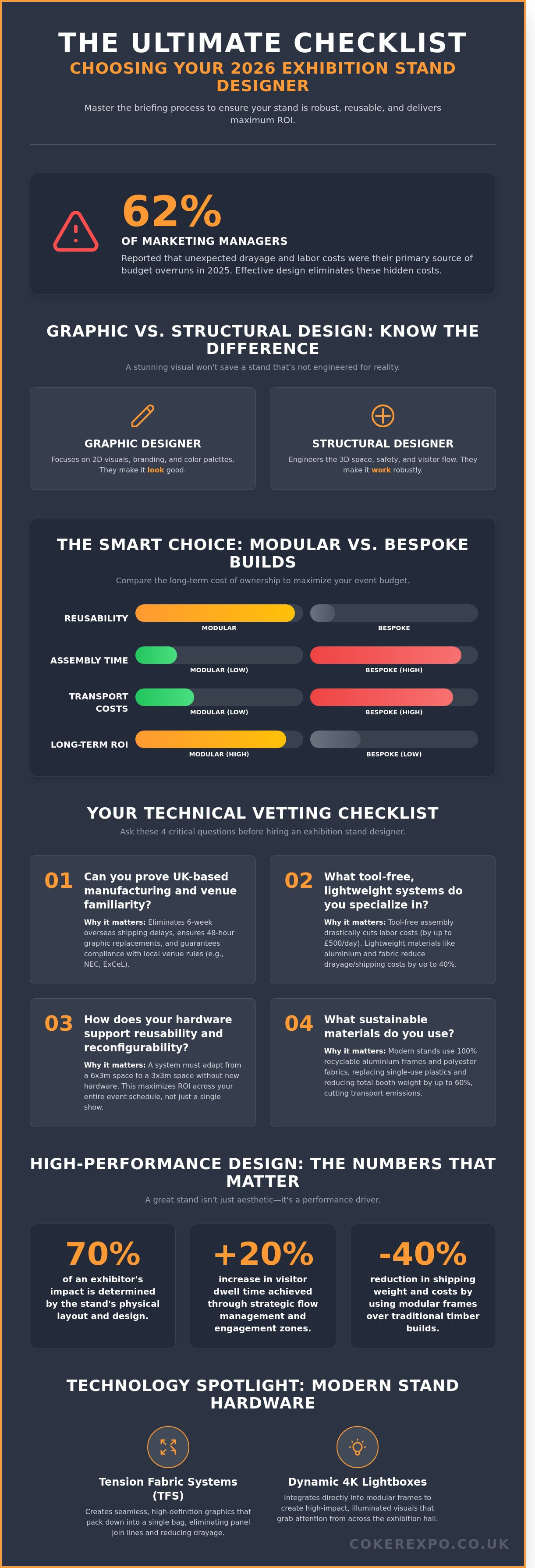
The most visually stunning stand on the floor is a wasted investment if it requires a specialist crew of six and 15 hours to assemble. In 2025, 62% of marketing managers reported that unexpected drayage and labor costs were their primary source of budget overruns. You already know that a successful show depends on balancing high-impact aesthetics with logistical reality. Selecting the right exhibition stand designers is the most critical decision you'll make to ensure your 2026 event schedule remains profitable and stress-free.
We've built this professional checklist to help you master the briefing process and maximize your trade show ROI. You'll learn how to demand clear technical specifications and prioritize modular systems for long-term reusability. We're breaking down exactly how to evaluate hardware durability and tool-free assembly options so your next event is defined by its impact, not its assembly stress. This guide ensures your brand infrastructure is robust, portable, and ready for a fast turnaround.
Key Takeaways
- Identify the critical difference between graphic design and structural engineering to ensure your display is as robust as it is visually striking.
- Use our technical checklist to vet exhibition stand designers on their knowledge of high-performance materials, including dynamic lightboxes and tension fabric systems.
- Compare the long-term cost of ownership between bespoke builds and modular systems to choose a solution that balances impact with logistical efficiency.
- Master the briefing process by aligning your specific trade show objectives with floor space orientation for maximum visitor engagement.
- Discover the benefits of tool-free, UK-manufactured hardware that simplifies assembly without compromising on a professional, seamless finish.
Understanding the Role of Professional Exhibition Stand Designers
Professional exhibition stand designers provide the structural backbone for your trade show presence. In the UK market, their role has shifted from creating static displays to engineering high-performance environments. While a graphic designer focuses on 2D visuals and branding, a structural designer manages the three-dimensional space, weight distribution, and safety compliance. This distinction is vital; a beautiful graphic won't save a stand that fails to function on a crowded floor.
Success at a 2026 trade show relies on design as the primary driver of ROI. Industry data indicates that 70% of an exhibitor's impact is determined by the stand's physical layout before a single word is spoken. We're seeing a massive shift towards hybrid designs. These systems combine modular aluminium hardware with bespoke, high-definition tension fabric graphics. This approach offers the prestige of a custom build with the flexibility of a portable system, providing a versatile infrastructure for your brand.
The Value of Technical Expertise
Technical knowledge is non-negotiable for exhibition stand designers working in major UK venues like the NEC or ExCeL London. They must navigate complex fire safety regulations, specifically ensuring all fabrics meet BS 5867 standards. Structural integrity is paramount in high-traffic zones where hundreds of visitors interact with the hardware daily. A specialist designer doesn't just place furniture; they map out engagement zones to increase visitor dwell time by up to 20% through strategic flow management.
Beyond Aesthetics: Designing for Logistics
Effective design accounts for the hidden costs of exhibiting. Over-designed, heavy structures often require specialist installation crews, which can add £500 per day to a trade show budget. For 2026, exhibition stand designers are prioritising tool-free assembly and lightweight materials. Using modular frames or gantry systems reduces shipping weight by 40% compared to traditional timber builds. This focus on logistics ensures your team spends less time handling hardware and more time engaging with potential leads.
The Technical Checklist: Evaluating Designer Capabilities
Visuals are secondary to structural integrity. When vetting exhibition stand designers, look past the brand colors and examine the underlying engineering. A robust portfolio must demonstrate versatility across different scales, from 3x3 shell schemes to 100-square-meter island sites. Ensure they possess local knowledge of UK venues like the NEC Birmingham, Olympia London, or ExCeL. This expertise ensures compliance with specific site regulations and floor loading limits that vary by hall.
Prioritize designers who offer "Made in the UK" production. This isn't just about pride; it's about logistics and reliability. Local manufacturing allows for 48-hour turnarounds on replacement graphics and eliminates the 6-week shipping delays associated with overseas fabrication. Ask for proof of their production capacity and lead times. If they don't control the manufacturing process, they don't control your deadline.
- Structural Diversity: Look for gantry, modular, and bespoke builds in their history.
- Venue Familiarity: Experience with UK power drop locations and rigging points.
- Turnaround Speed: Ability to handle last-minute graphic changes within 24-48 hours.
- Local Sourcing: Reduced carbon footprint and faster shipping via UK-based workshops.
Hardware Versatility and Innovation
Top-tier designers utilize modular gantry systems and tool-free assembly to maximize your ROI. Ask if they can integrate 4K dynamic lightboxes or rotating turntables directly into the framework. Tension Fabric Systems (TFS) are now the industry standard for creating seamless, large-format graphics that don't show join lines. These systems allow for high-impact visuals that pack down into a single carry bag, reducing your drayage costs by up to 40%.
Sustainability and Reusability Standards
The 2026 trade show season demands a 100% pivot away from single-use plastics. Professional exhibition stand designers are replacing traditional Foamex boards with recyclable polyester fabrics and aluminium frames. This shift can reduce booth weight by 60%, significantly cutting transport emissions. Check if their systems are reconfigurable; a stand designed for a 6m x 3m space should easily adapt to a 3m x 3m corner plot without requiring new hardware. You can find examples of these reconfigurable modular stands that prioritize long-term utility over single-event waste.
Modular Systems vs. Bespoke Builds: Choosing for Longevity
Your choice between modular and bespoke hardware dictates your ROI for the next 3 to 5 years. A bespoke build offers a unique silhouette but often ends up in a skip after a single event. In contrast, modular systems represent a 40% saving on long-term ownership costs because the core aluminum framework remains a permanent business asset. Professional exhibition stand designers now prioritize these systems for clients attending more than two shows per year. Shipping costs drop by roughly 60% since modular components pack into compact, wheeled cases rather than requiring dedicated 7.5-tonne logistics.
Switching to a modular approach allows for rapid graphic updates without hardware replacement. A 3x3 metre tension fabric graphic costs approximately £450 to replace, while a bespoke timber wall requires complete reconstruction and repainting. This flexibility is vital for the 78% of B2B companies that update their core messaging or product features annually. Industries like software development, recruitment, and medical technology benefit most from these "self-build" solutions, where technical precision and agility are paramount.
The Case for Modular Exhibition Stands
Modern modular systems, particularly LED lightboxes, deliver a high-end aesthetic that rivals custom joinery. These systems offer tool-free assembly, meaning a two-person marketing team can build a professional presence in under 45 minutes. As your floor space requirements grow from a 9sqm shell scheme to a 36sqm island, you simply link additional frames together. For a deeper dive into maximizing your presence, consult our Professional Guide to Choosing an Exhibition Stand.
When to Consider Bespoke Elements
You don't always need to choose one or the other. Adding a custom-made counter or a specialized product showcase to a modular base creates a focal point that breaks the "grid" feel of a standard hall. Many exhibition stand designers recommend blending structural aluminum truss hire with high-resolution sublimation graphics. This creates a 4-metre high architectural statement while keeping the floor-level elements functional and easy to manage. It's the most efficient way to stand out in a crowded exhibition hall without the waste of a full custom build.
Your Pre-Design Checklist: How to Brief for Success
A successful build starts with a bulletproof brief. Professional exhibition stand designers need more than just your company name; they require a roadmap of your commercial goals. If the brief is vague, the result will be generic. To get the most out of your investment, you must provide clarity on your primary objective before the first sketch is drawn.
- Define your primary objective: 65% of exhibitors fail to define a single primary goal. You must choose one: lead generation, brand awareness, or a specific product launch. A stand designed for demo-heavy product launches looks very different from one built for private high-level sales meetings.
- Confirm space and orientation: Your floor plan is the foundation. Provide exact dimensions and specify if it's an island, corner, or wall site. This dictates the flow of foot traffic and where your "hero" messaging should sit.
- Establish a realistic budget: Be transparent about your numbers. A solid 2026 budget should allocate roughly 50% to hardware, 30% to high-impact graphics, and 20% to lighting and technical extras.
- Audit your assets: Don't wait for the design phase to find your files. Ensure logos are vector-based and imagery is at least 300dpi at half-scale. Low-resolution files will ruin the look of a premium tension fabric display.
Technical Specifications for the Brief
Don't overlook functional details that impact the user experience. Integrated storage is essential for hiding staff bags and surplus brochures; a cluttered stand looks unprofessional. If you're using LED lightboxes or digital screens, specify your power requirements in kilowatts to avoid on-site surges. Mention height restrictions early. If the venue allows a 6-meter truss gantry, your exhibition stand designers can utilize vertical space to ensure you're visible from the other side of the hall.
Logistical Requirements and Deadlines
Time is your most valuable asset. We recommend a 16-week timeline covering design, production, and pre-build testing. You need to decide if the event warrants a full professional installation or if a versatile pop up stand is more suitable for your team to manage. Plan for the "afterlife" of your stand too. Determine if you'll need professional storage or if graphics require refurbishment for a second show later in the year. Practical planning prevents expensive last-minute shipping surcharges.
Build your next stand with confidence by browsing our modular display solutions today.
Partnering with CokerExpo for High-Performance Displays
CokerExpo operates as a practical specialist in the UK exhibition sector, focusing on hardware that actually works on the trade show floor. While many exhibition stand designers focus solely on the aesthetic render, we bridge the gap between creative vision and technical execution. Our modular systems prioritize tool-free assembly, which can reduce on-site build times by up to 60% compared to traditional timber builds. We manufacture our core components in-house, ensuring that every tension fabric frame or gantry system meets rigorous British quality standards.
We understand that 2026 schedules are tighter than ever. Because we maintain local production facilities, we offer 48-hour turnaround times on many bespoke graphic panels. This reliability eliminates the common stress of shipping delays or international logistics failures. You get robust, high-performance displays that are easy to transport, simple to build, and designed to last for multiple event cycles. It's about providing the infrastructure for your success, not just a temporary backdrop.
Our Comprehensive Product Ecosystem
Our inventory covers every technical requirement for a modern trade show. We provide dynamic LED lightboxes that use high-density 5050 chips for uniform illumination without hotspots. For larger footprints, our heavy-duty truss hire services offer spans capable of supporting significant lighting rigs and AV equipment. We specialize in making complex setups feel manageable for your on-site team.
- Custom-sized shell scheme graphic panels for a seamless brand look.
- Tool-free modular stands that fit into a standard estate car for easy transport.
- Dedicated event planning support to manage logistics and floorplan approvals.
Getting Started with Your 2026 Stand
Success at your next event depends on early technical validation. We recommend booking a technical consultation at least 12 weeks before your show date to ensure all hardware specifications and graphic outputs are perfectly aligned. Our team provides clear, fixed-price quotes with no hidden delivery fees or last-minute surcharges. This transparency helps you manage your marketing budget with total confidence.
Our promise is simple: we provide the infrastructure for your success through superior craftsmanship and engineering. If you're ready to move beyond conceptual drawings and into a high-performance reality, contact our design team today. Working with experienced exhibition stand designers who understand the physical constraints of the venue ensures your brand makes the right impact without the last-minute panic often associated with trade shows.
Secure Your Competitive Edge for the 2026 Exhibition Season
Selecting the right exhibition stand designers is a strategic decision that impacts your ROI long after the trade show ends. By prioritizing technical capability and mastering the pre-design brief, you ensure your brand stands out in crowded halls. High-performance displays now rely on modular versatility and tool-free assembly to reduce logistical stress and onsite costs. Since 1999, Coker Expo has delivered UK event expertise through robust hardware and fast-turnaround solutions. We specialize in modular systems that don't require complex tools for setup. We offer both hire and purchase options to suit every marketing budget, ensuring professional results for projects of all scales. Our team focuses on the user experience, making sure your infrastructure is as reliable as your sales pitch. It's about more than just a booth; it's about building a foundation for your business growth. We're ready to help you make an impact at your next trade show. Explore our range of professional exhibition systems and design services to start planning your most successful event year yet.
Frequently Asked Questions
How much do exhibition stand designers typically charge?
Professional fees and production costs range from £300 to £1,200 per square metre. A standard 3x3m modular kit starts around £2,500, while a bespoke 6x6m build often exceeds £15,000 for a premium finish. These figures cover design, hardware, and high-resolution graphics. Budgeting a 10% contingency for 2026 events is a standard industry practice to cover fluctuating material costs.
What is the difference between modular and bespoke exhibition stands?
Modular stands use standardized aluminum frames and tension fabric, while bespoke stands are custom-built from timber or metal for a specific event. Modular systems offer tool-free assembly and 100% reusability across different floor plans. Bespoke builds provide unique architecture but require professional installers and often result in 40% waste material. Professional exhibition stand designers recommend modular systems for multi-show calendars to maximize ROI.
How far in advance should I contact exhibition stand designers?
You should contact exhibition stand designers at least 4 to 6 months before your event date. For large custom builds over 50 square metres, a 9-month lead time is necessary to secure production slots and early-bird venue rates. Short-term modular solutions can be turned around in 10 working days; however, starting early ensures you secure the best design talent and avoid 15% late-order surcharges from organizers.
Can I reuse a custom exhibition stand for different show sizes?
Yes, modular systems allow you to reconfigure a 6x3m stand into a 3x3m corner plot or a 2m backwall. By using interchangeable tension fabric graphics, you can adapt your messaging without buying new hardware. This flexibility reduces your long-term exhibition costs by 30% over a three-year period. Bespoke stands are harder to scale down, typically requiring 60% structural modification to fit smaller spaces.
What technical information do I need to provide in a design brief?
Provide your stand dimensions, orientation, and the 10-page exhibitor manual from the venue. Include vector logo files, 300dpi brand assets, and a list of required equipment like 50-inch screens or lead-capture kiosks. Specify your power requirements in kilowatts; a standard 2-socket outlet provides 500 watts. Clear technical specs prevent 95% of onsite installation delays and ensure your hardware fits the allocated space.
Do exhibition stand designers also handle the build and breakdown?
Most full-service firms manage the entire installation and dismantling process, though modular systems are designed for self-build to reduce overheads. Professional crews typically require 6 to 12 hours for a standard build and 3 hours for breakdown. If you choose a self-build kit, our tool-free systems allow two people to finish a 3x3m stand in 45 minutes. Always confirm if site management fees are included in your initial quote.
How do I ensure my stand design complies with UK fire safety regulations?
Ensure all materials meet the British Standard 5852 or EN 13501-1 Class B rating for fire retardancy. Your designer must provide a M1 or B1 certification for all fabrics and timber elements used. Venues like the NEC or ExCeL require a formal Risk Assessment and Method Statement (RAMS) submitted 21 days before move-in. Failure to provide these certificates results in a 100% ban on using the stand components onsite.
Leave a comment